

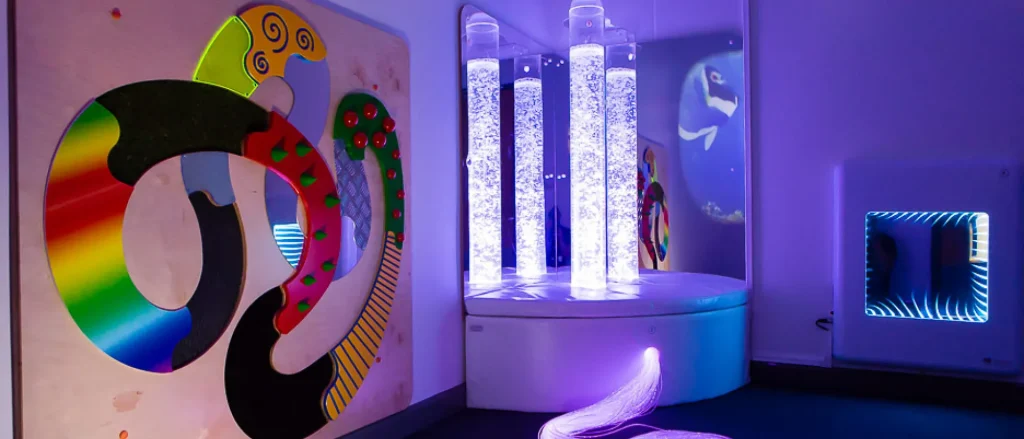
Think about the last time you walked barefoot across a floor. Was it cool? Smooth? Maybe a little gritty from sand? For most of us, it’s a fleeting sensation, quickly forgotten. But for neurodiverse individuals—including many with autism, ADHD, sensory processing disorder, or anxiety—the floor isn’t just something you walk on. It’s a constant, immersive sensory experience. It can be a source of profound comfort or, honestly, a minefield of overwhelming input.
That’s why designing floors with neurodiversity in mind isn’t just a niche interior design trend. It’s a crucial step toward creating truly inclusive spaces—homes, schools, clinics, workplaces—where everyone can feel grounded and secure. Let’s dive into the principles, materials, and, you know, the human considerations that make a floor not just functional, but fundamentally supportive.
The Sensory Floor: More Than Just a Surface
For sensory-sensitive individuals, the floor is a primary interface with the world. It communicates through texture, temperature, sound, and visual pattern. A shiny, echoing vinyl might scream with glare and noise to one person, while a deep, plush carpet might feel confusing and unstable to another. There’s no one-size-fits-all solution, which is the real design challenge—and opportunity.
The goal here is to offer choice and control. A well-designed sensory space might feature different flooring zones, allowing a person to self-regulate by moving from a calming, firm surface to a softly stimulating one. It’s about reducing involuntary sensory assaults and providing options for needed input.
Key Sensory Considerations
When planning a floor, consider these four sensory channels:
- Tactile (Touch): Is the surface smooth, nubby, warm, cool? Seams and transitions matter hugely—a sudden lip or change can be jarring.
- Visual: High-contrast patterns, glossy finishes, or repetitive lines can be perceived as “busy,” swirling, or even moving, causing distress. Muted, monolithic colors are often safer.
- Auditory (Sound): Flooring is a major acoustic player. Hard surfaces amplify footsteps and echoes, which can lead to auditory overload. Softer materials absorb and quiet a space.
- Proprioceptive (Body Awareness): This is the sense of where your body is in space. A floor with a bit of give, like cork, provides gentle feedback that can be incredibly organizing and calming for someone seeking deep pressure input.
Material World: Choosing the Right Flooring
Alright, so what materials actually work? Here’s a breakdown of common options through a sensory lens.
| Material | Sensory Profile | Best For / Considerations |
|---|---|---|
| Cork | Naturally warm, slightly soft underfoot, excellent sound absorption. Visual texture is usually subtle. | Calming zones, rooms where quiet is key. Provides gentle proprioceptive feedback. Naturally antimicrobial. |
| Luxury Vinyl Plank (LVP) | Consistently smooth, cool to the touch, low visual variation (in matte finishes). | Those who seek predictable, firm surfaces. Easy to clean. Avoid high-gloss options. Can be noisy. |
| Low-Pile Carpet | Soft, warm, dampens sound dramatically. Tactile input is uniform. | Bedrooms, reading nooks. Choose tightly woven, non-patterned styles. Ensure low-VOC adhesives/padding. |
| Polished Concrete | Very firm, very cool, often high-gloss and echoey. | Can be overwhelming. Use in small zones or with large, sound-absorbing rugs. Matte sealers are better. |
| Rubber Flooring | Firm yet yielding, provides clear proprioceptive input. Often has textured options. | Playrooms, transition areas, or anywhere durable, input-friendly flooring is needed. Watch for strong initial odor. |
You see, the “best” material depends entirely on the individual’s profile. A person who is sensory-avoidant might crave the quiet, predictable embrace of a solid, matte LVP. A sensory-seeker, on the other hand, might find immense comfort in the tactile journey of a textured rubber floor tile.
Design Strategies for Calm and Navigation
Material choice is just the start. How you implement it makes all the difference.
Transitions and Zoning
Abrupt changes are the enemy. Where different floors meet, use transition strips that are flush, or as close to flush as possible. Better yet, create deliberate, gentle zones. Use a large, anchored area rug on a hard floor to define a “soft zone.” This visual and tactile cue helps with spatial understanding and offers a clear choice: “I can be here on the soft, or there on the firm.”
Color and Pattern: The Visual Noise Factor
Let’s be clear: busy patterns on the floor can be genuinely disorienting. Marbled effects, bold geometrics, even high-contrast speckles can appear to swim or vibrate. The safest bet? Low-contrast, monolithic colors. Soft, earthy tones or muted neutrals tend to recede visually, creating a stable, grounding plane. If you want interest, texture is a far safer avenue than pattern.
Underfoot: The Hidden Layer
Don’t forget the padding! A good underlayment can transform a floor’s sensory profile. It can add cushion for proprioceptive feedback, dampen sound on hard surfaces, and provide thermal insulation. For carpet, a high-density pad is a worthy investment. For floating floors, consider an acoustic underlay to minimize hollow sounds.
Putting It Into Practice: Real-World Applications
So, what does this look like in actual spaces? Well, imagine a classroom for neurodiverse learners. Instead of uniform flooring, it might have:
- A main learning area with quiet, firm cork.
- A reading corner with a soft, low-pile carpet square.
- A “movement break” zone with interlocking, textured rubber tiles for jumping or pacing.
In a home, a child’s bedroom might feature wall-to-wall, non-patterned carpet for quiet and safety, while the living area uses a matte, wood-look LVP for easy cleaning and a defined, predictable surface. The hallway? Maybe that’s where you put a straight-path runner—a visual and tactile guide that helps with navigation and focus.
The point is intentionality. It’s asking, “What sensory experience does this floor create?” rather than just, “What style is this floor?”
A Foundation for Well-Being
Designing for neurodiversity is, at its heart, an exercise in empathy. It acknowledges that we all experience the physical world in uniquely wired ways. A thoughtfully designed floor does more than cover a subfloor—it can reduce anxiety, prevent meltdowns, improve focus, and simply provide a moment of quiet comfort in a demanding day.
It moves us away from design that is merely aesthetic or durable, toward design that is neurologically considerate. And in doing so, it creates spaces that don’t just house people, but truly hold them. That’s the real foundation we should all be building on.
About The Author


More Stories
Low-VOC and Non-Toxic Flooring Choices for Allergy-Sensitive Households
Acoustic Underlayment Solutions for Multi-Story Apartments: The Quiet Revolution
Salt-finish concrete for outdoor-to-indoor transitions